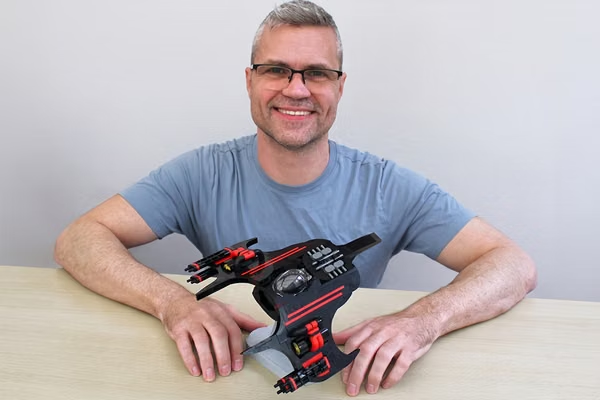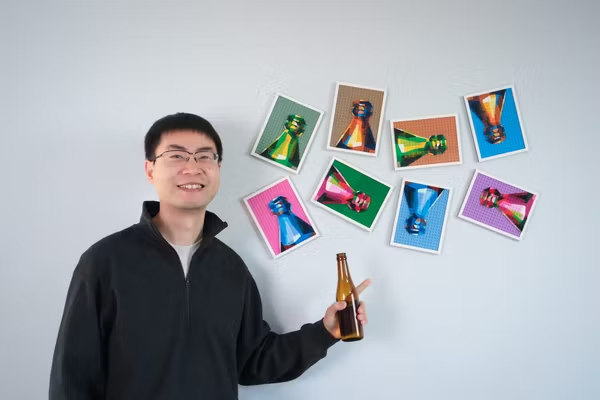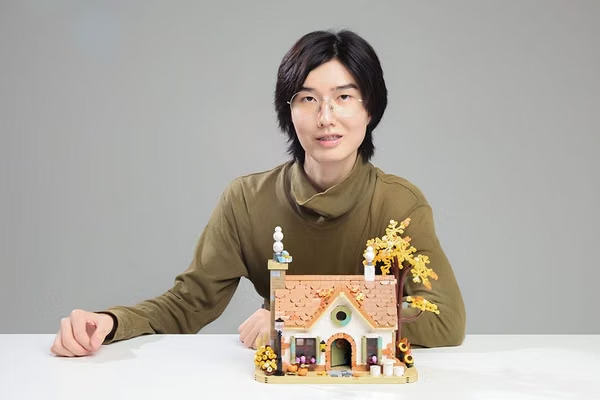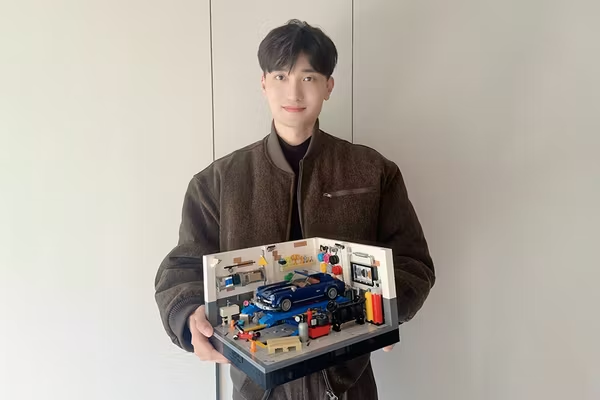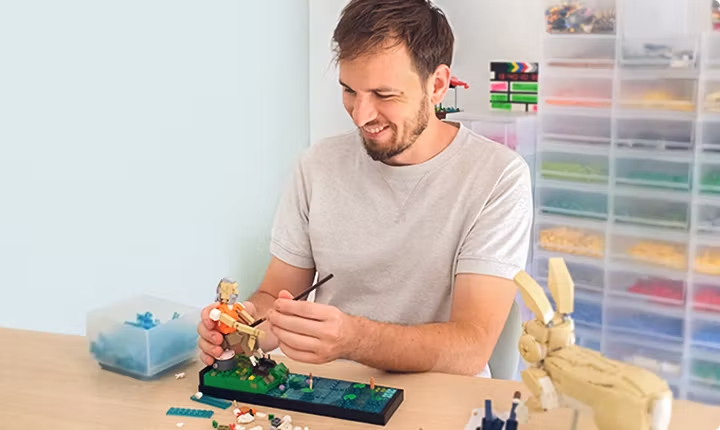
We are thrilled to feature Nick from Sydney, Australia, an acclaimed designer, Finalist on LEGO Masters Australia 2022 🇦🇺, and a professional video editor.
Nick is one of the five featured designers in our special Brickwith+ Campaign, for which he created the serene model, Together by the Water's Edge.
With over a decade dedicated to visual storytelling in film, documentaries, and commercials, Nick's deep understanding of composition, rhythm, and emotional narrative profoundly shapes his brick art.
This unique background is beautifully reflected in Together by the Water's Edge, a piece that captures a quiet, universal moment of patience and focus, rendered using the Brickwith palette.
Join us as Nick shares the inspiration behind his creation and his experience exploring Brickwith part library.
Meet the Designer: Nick Lever
To start, please introduce yourself to Brickwith's friends.
Hi, I’m Nick from Sydney, Australia. I’m 34, which means I’m old enough to remember when sand red was a colour, and young enough to believe it might return someday.
Besides designing with bricks, do you have any other hobbies?
Yes! Outside of building with bricks, I’m a video editor by trade, so I spend a lot of time storytelling through film.
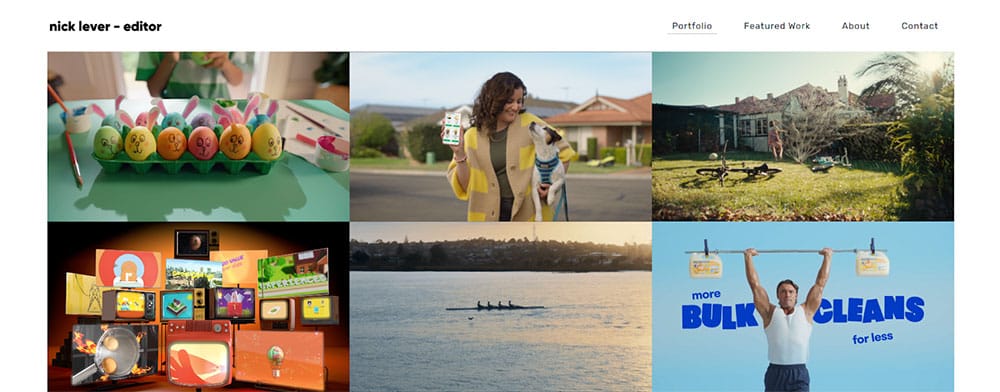
I’m also really into climbing/bouldering, cooking (especially vegan Asian food), and I’m a bit of a collector at heart: whether it’s LEGO, records, or the occasional Magic: The Gathering cards.
How has the long-term experience in video editing influenced the way you approach model design? Do you see similarities between editing a video and building a model?
I love this question - there’s a surprising amount of overlap. Both are really exercises in taking many small elements and arranging them to create a feeling or tell a story.
Editing taught me that composition and rhythm matter just as much as detail, it’s about flow and connection.
I think it’s really shaped how I build; you can have the best-looking model in the world, but if there’s no story behind it, no emotional hook, it won’t resonate.
Editing is about composition, pacing, and telling a story without the audience seeing the scissors.
Building a model is the same: structure, flow, balance.
And sometimes, like editing, it’s about staring at it for five hours and deciding the first version was better.
You mentioned that before 2021, you hadn’t touched LEGO for about 20 years. After joining LEGO Masters, you started creating again. Could you tell us more about that journey?
I’m the oldest of eleven grandchildren, so whenever my cousins came over, I’d tip out all my bricks onto a blanket, and they’d ask me to build things for them.
I think the last set I ever bought back then was the Recon-Mech RP (set 7314-1) in 2001 - a proper throwback.
More than twenty years later, my friend Gene and I were cast on LEGO Masters, which meant I had to quickly familiarize myself with all the new parts before filming.
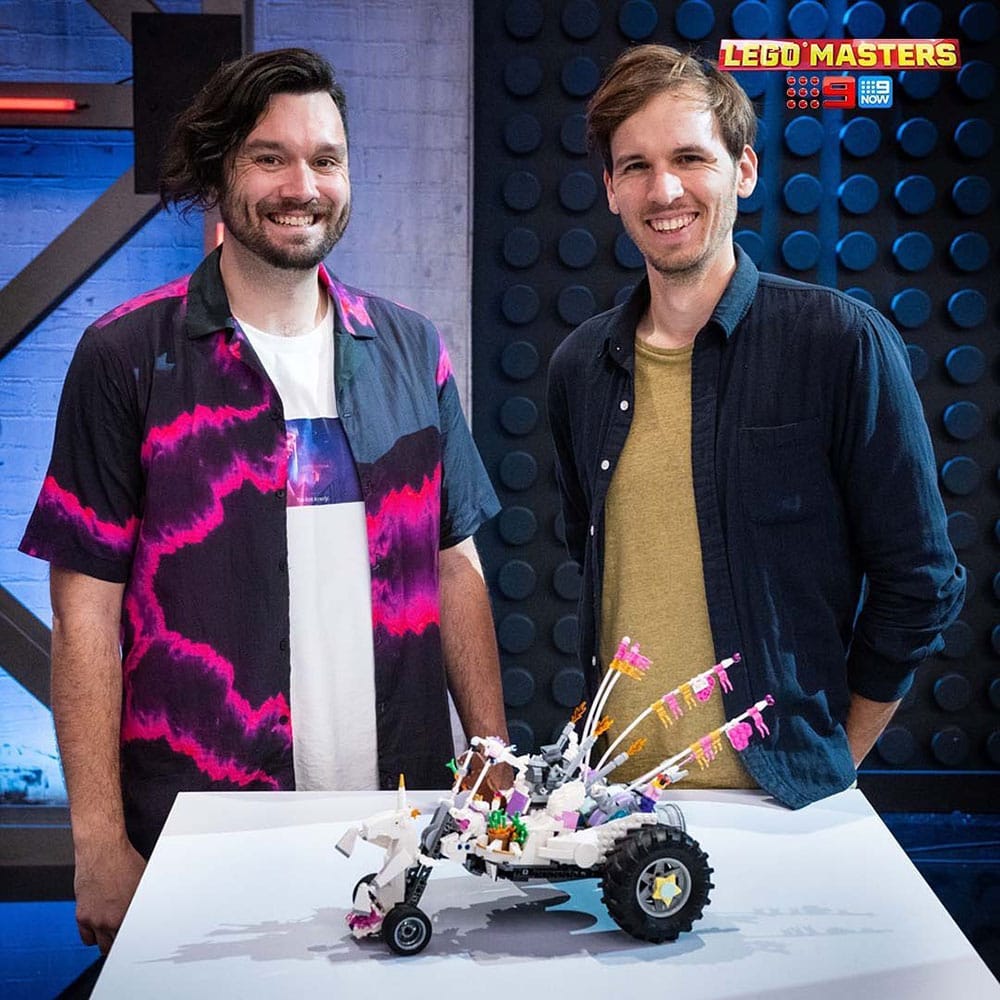
What people might not realize is that every episode of LEGO Masters is basically a masterclass in building: you’re getting one-on-one tutorials from some of the best builders in the world under the most ridiculous pressure imaginable.
I came out of that show with a whole new skill set and a serious itch to keep designing.
What kind of music do you love most?
I like all sorts! I think I really enjoy relaxing music like neo soul - Khruangbin are one of my favourites currently.
Daily Inspirations
What kinds of everyday life most often spark your creative drive?
Usually, the tiny, throwaway moments - random mechanisms, shower thoughts, things that probably shouldn’t be interesting but are.
I’ll look at something and think, “that’d make a great model,” and that’s why my build list is now about five pages long and growing.
Which elements of life have given you great inspiration or a strong urge to create?
I tend to build from life rather than licence. I’ve got nothing against IP builds, but I love creating my own little worlds.
Most of my ideas come from everyday moments: a walk, a view from the train.
Usually it starts with something small from daily life, like a movement or an odd detail that makes me laugh.
But whatever it is, it has to have a bit of play in it.
The things I make are toys, at the end of the day, so they’re meant to be fun! I want my models to invite interaction, to make people reach out and do something with them, not just look at them.
How do you record when inspiration strikes?
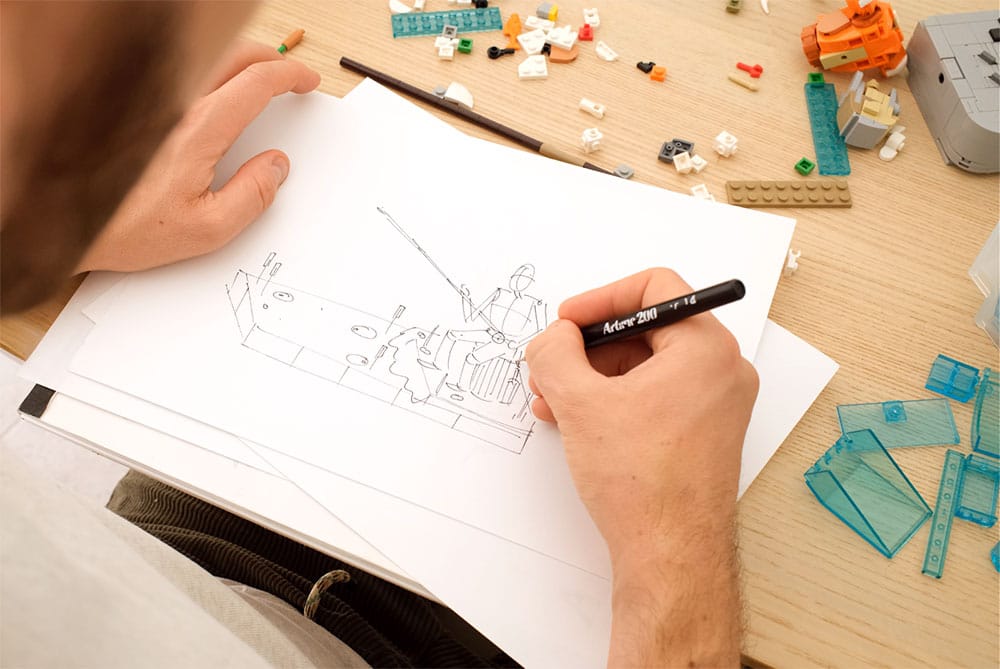
Pen and paper, always.
I write and sketch ideas constantly; it’s a big part of my process. You can save a lot of time (and bricks) by sketching before you build: it helps solve design problems early.
If I’ve got more time, I’ll do a quick digital sketch and collect a little reference folder on my laptop to guide the final model.
When you’re designing or building, do you usually listen to any kind of music?
Always! Khruangbin, Wu Tiao Ren - I try to match the soundtrack to the project.
When I was building my series of Orcs, it was a lot of King Gizzard & the Lizard Wizard, when I was shaping up my Bouncing Bunny, it was Cut Worms and Mac DeMarco.
If the build’s going well, it’s a soundtrack. If it’s going badly, it’s just me sighing over the beat.
Story behind Together by the Water's Edge
This campaign’s theme is “Brickwith+”. How do you interpret this theme?
For me, “Brickwith+” is all about connection. The joy of building is universal; it’s what brings people together.
Within this theme, what inspired you to create the fishing scene?
I was thinking about quiet moments; the kind of peace you only get when you’re focused on something simple.
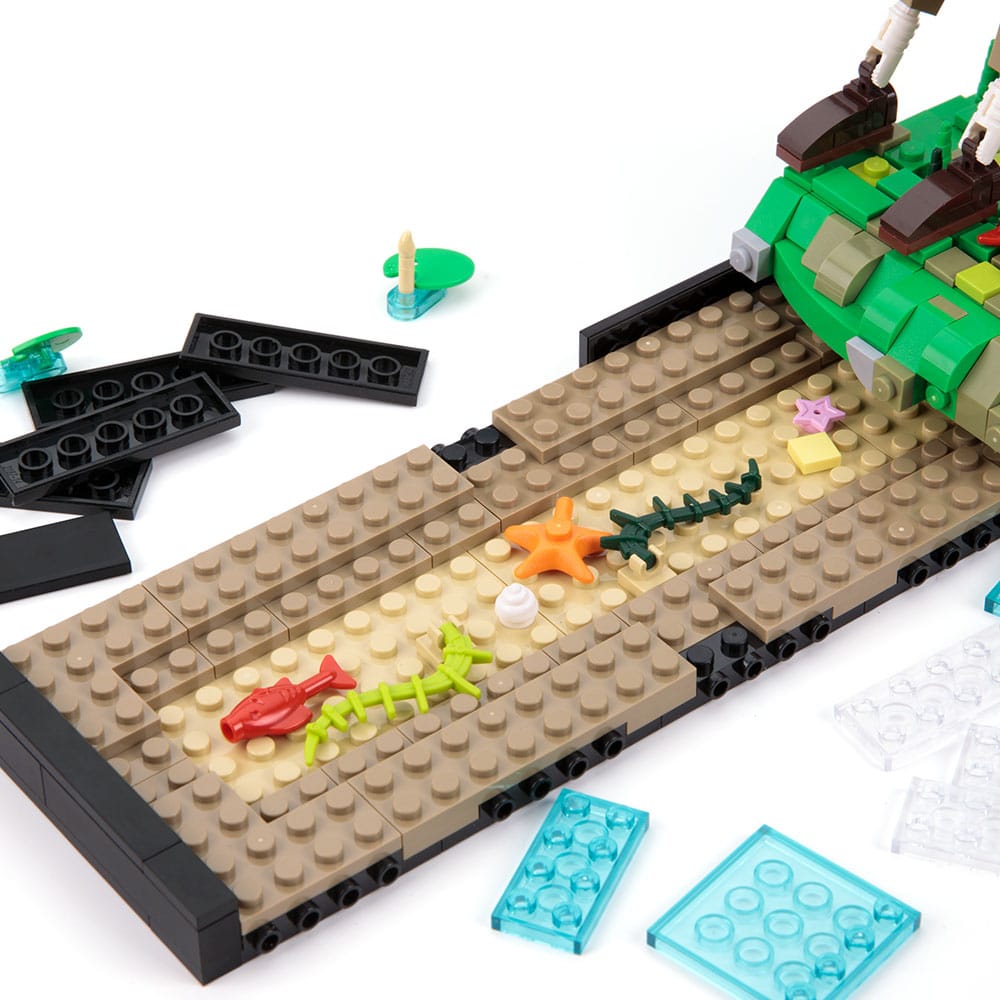
Fishing felt right. It’s patient, and a bit mysterious too. You don’t know what’s under the water, and I liked the idea of putting a few fun surprises under there.
If you could give this scene a certain emotion or story, what kind of feeling or narrative would you want people to experience?
Contentment. The feeling of being exactly where you’re supposed to be, even if nothing’s biting.
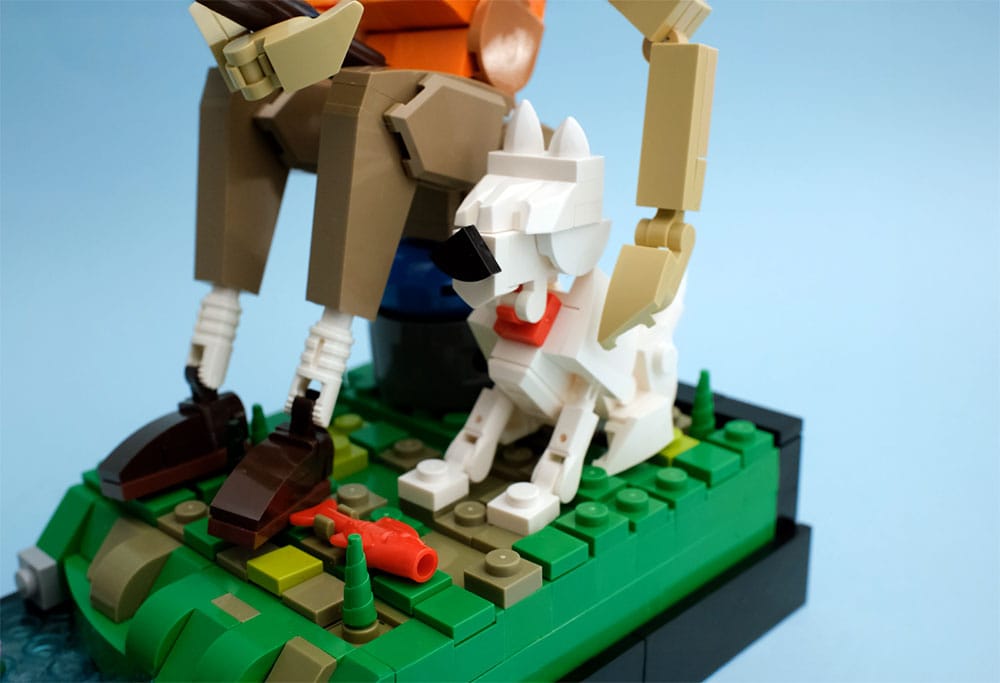
Who is the fisherman? Was the dog based on a real pet? Do you have a dog?
The fisherman isn’t anyone specific, but he represents that quiet, universal moment of patience and focus - the kind that feels peaceful but full of anticipation.
The little dog, though, is absolutely based on my childhood pet. She was a Jack Russell terrier, a rescue, and very disobedient in the best way (she wouldn’t have lasted five minutes by a pond without chasing something).
I think she snuck into the build because I wanted that same cheeky, loyal energy beside the fisherman.
How long did it take from the first sketch to the final build?
About a week, though a lot of that was fine-tuning details that no one else would ever notice — classic builder behaviour.
In creating this model, was there anything that felt different compared to your previous builds?
Yeah, it felt different. Normally, I think about structure first, but this time it was more about mood.
I wanted it to feel calm and alive at the same time, so I stopped worrying about technique and just followed what looked right.
What were the main challenges during the creation process?
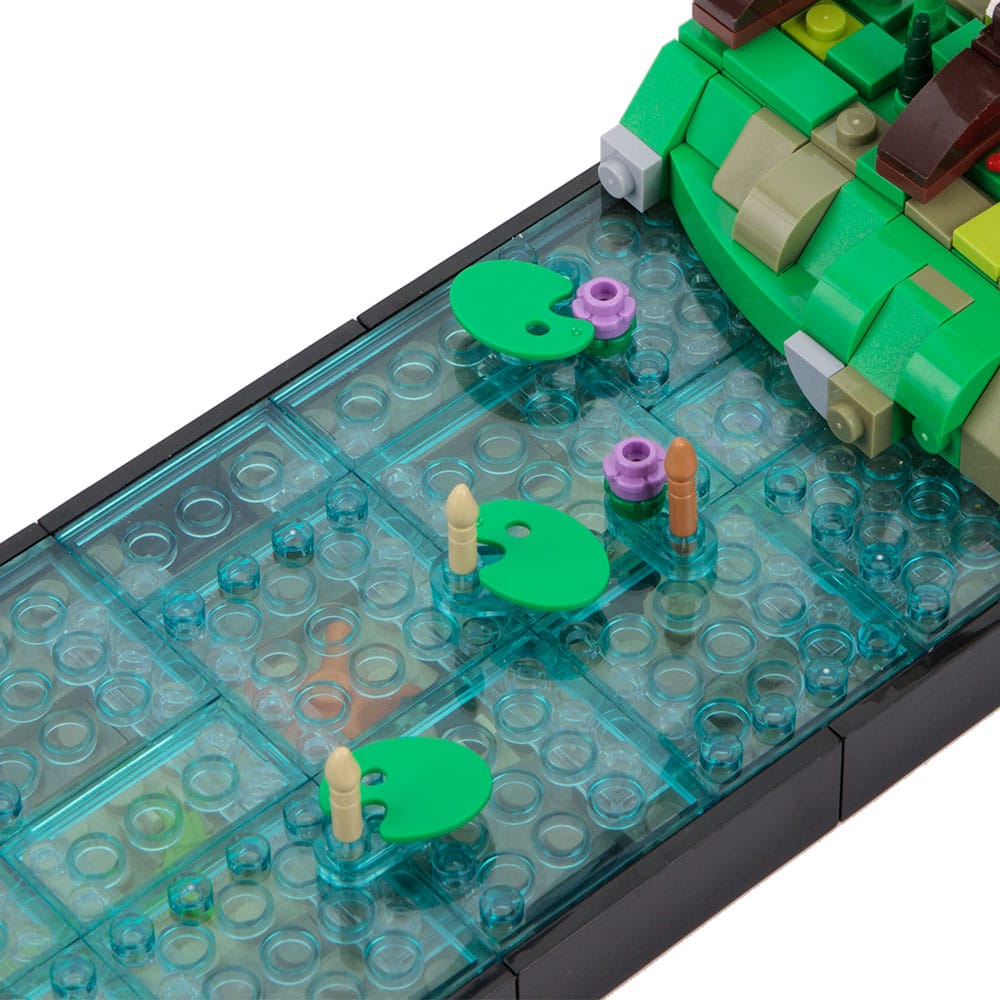
Balancing the reflections and keeping it readable. Transparent parts can turn into chaos fast, place a tile wrong, and it looks like an aquarium exploded.
You considered putting a bottle in the bucket — what made you decide to leave it out?
I decided it distracted from the calm. It turned the story into “what’s in the bottle?” instead of “what’s he feeling?” Sometimes less really is more, even when you’ve got plenty of pieces.
What was the most exciting part of creating this build?
Honestly, having access to the Brickwith palette was one of the most exciting parts of this build.
The LEGO system has very few transparent blue tiles and panels, so suddenly having a whole range of recolours to play with was incredible. It was kind of why I chose a water scene! I tried to use as much as possible, mixing non-system shades to make the water feel alive. It was a real treat to build with colours that I don't normally have access to.
This was your first time using the Brickwith parts library — what was your impression?
Honestly great! It felt curated and modern, like someone had finally decluttered the LEGO attic. Everything worked the way I hoped (which never happens).
Building with Compatible Parts
In what situations would you choose to buy compatible parts?
Usually, when I need 50 of a piece that LEGO hasn’t made since 1994 and currently sells for the price of a small yacht.
Whether it’s LEGO or other brands, what’s disappointing about the current parts library available on the market?
Colour gaps. I’ve dreamed of a world where every part exists in every colour. I’m not asking for much, just ball joints in more colours than grey, please.
Do you mix LEGO with other parts when building? And if so, what issues have you run into?
Sometimes, yes - there are specific cases where it just makes sense. It’s a bit like sneaking spinach into a smoothie: you hope nobody notices, but if they do, it’s all part of the recipe.
Usually, it’s a matter of availability. If I need 200 of a particular element and there are only ten in stock worldwide on BrickLink, I’ll look for compatible options.
That said, I tend to avoid third-party parts that interlock, things like bars, clips, and ball joints.
Those tolerances have to be absolutely perfect down to the millimetre, otherwise the joints end up either too loose or too stiff to be useful.
What would you love to see change or improve in the current parts market?
Quality and tolerances still aren’t great.
Interlocking elements such as bars and clips, ball joints, and even teeth connections vary too much from one piece to the next—some are too stiff, others too weak.
Achieving those extremely tight tolerances (down to 0.01%) would go a long way toward making everything fit together more consistently.
Also, sustainability! There’s still a long way to go with ethical sourcing, recycling, lower toxicity, and gentler production processes.
Less plastic, more paper-based or biodegradable options - that’s where the industry really needs to start investing next.
Share with Builders
How do you share instructions? Do you have any standards for what to share and not?
Yes, I share instructions through Rebrickable and Gumroad (I also have a few projects on IDEAS).
My rule is simple: if I’d be happy to build it myself, and not throw the laptop halfway through, it’s worth sharing. I try to make the process clean, clear, and enjoyable.
I actually like assembling IKEA furniture, so maybe I’m not the best benchmark for frustration.
How many people go on to buy the parts and rebuild your designs?
More than I expected, honestly! Every time someone tags me with a built version of one of my MOCs, I get that weird mix of pride and panic - like, “oh wow, they actually did it… I hope it holds together.”
Are those people usually brick fans or not?
Mostly AFOLs, but occasionally someone surprises me, like a parent who built somethingwith their kid for a school project, or someone who said they hadn’t touched LEGO since childhood but found one of my builds online.
Have fans ever come back to you with small struggles?
Constantly! My DMs are half compliments, half confessions: “I can’t find this part in that colour,” I love helping troubleshoot - it’s part of the fun.
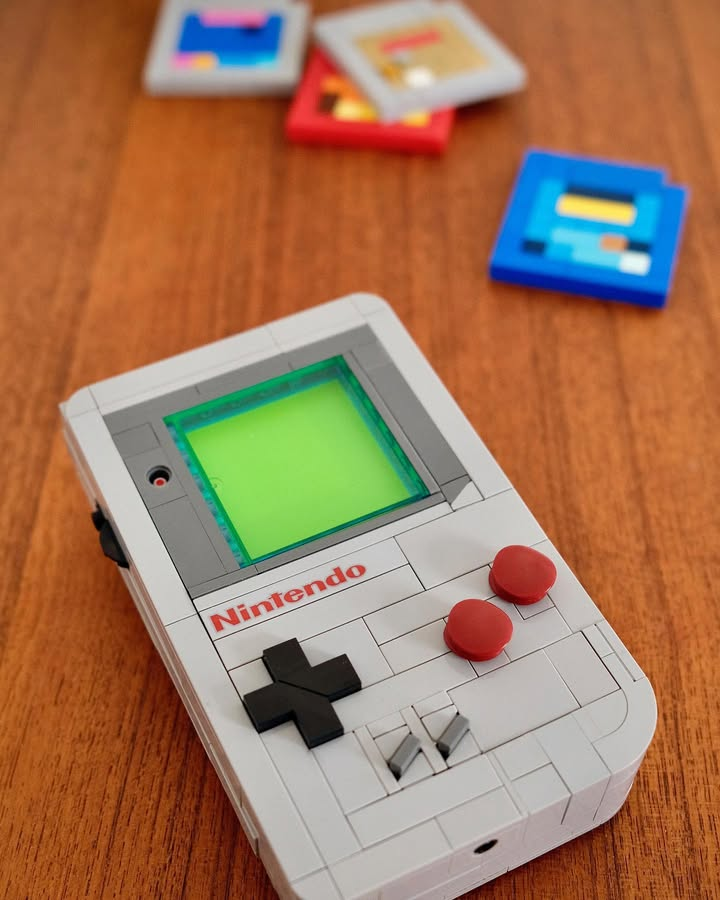
I’ve taken on a lot of feedback about my Gameboy model from members of the community, and it’s (literally) shaped the model.
What kinds of moments of joy, satisfaction, or touching experiences do you have from sharing your designs?
Seeing my builds recreated all over the world never gets old.
I once had someone reach out who told me they’d built my LEGO Game Boy MOC a few years back and kept it on their desk at Nintendo headquarters in Redmond, Washington
Moments like that remind me why I share what I make.
Creator Support
From a creator’s perspective, what kind of support with parts would be most valuable to you?
More weird pieces, more colours, fewer limits.
What tools or services could make your creative process easier?
A price warning, a lighting preview, and maybe an “are you sure about that?” alert. That’d cover most of my bad decisions. Maybe.
In terms of community, what kind of support will encourage you to keep creating and sharing?
Better ways to get good builds seen without turning into a full-time social media manager. Maybe even a challenge or two with prize support!
If you think beyond just parts and community, is there any other kind of support you feel a platform could provide to help you as a creator?
Maybe mentorship programs pairing newer builders with veterans - that’s the kind of thing that keeps the hobby growing.
Thanks for having me! It’s been great to share a bit about how I build and why I keep doing it, it all comes back to the fun of creating and connecting through play.
Editor's Note
Nick’s Together by the Water’s Edge is a beautiful reminder that the most profound stories often lie in the quietest moments—the patience of a fisherman, the loyalty of a small dog, and the calm reflection of the water.
His unique perspective, shaped by the rhythm of video editing, proves that building is as much about emotional composition as it is about physical structure.
We are thrilled that the expanded possibilities of the Brickwith palette helped Nick bring this feeling of contentment to life.
We look forward to seeing the new worlds Nick—and you—will build next, and how you will use the power of connection and the possibilities of an expanded palette to tell your own stories.
Interviewee
Nick Lever @clicklever
Interviewer
Sherry
Editor
Cornelia
About Brickwith
Brickwith.com is the official destination for premium Gobricks building parts, offering an extensive selection of parts and colors, trusted quality, and tools built for creators. Every order is individually sorted and packed according to your parts list, giving builders a faster, smoother experience from checkout to construction.